In Canada, social housing is subsidized rental housing often developed by governments or non-profit organizations. It aims to provide affordable housing for low-income individuals and families who would otherwise struggle to find suitable accommodations in the private sector.
Canada had a strong housing welfare system in the 1960s and 1970s, but this changed in 1993 when the federal government stopped funding social housing programs. Public divestment created marginalized social housing. In Canada, approximately 3.5 percent of housing stock is social housing, compared to the Netherlands (30%), Austria (20%), and Great Britain (16%). Our exceedingly low percentage has stigmatized social housing to the “deserving poor” rather than a socially accepted or desired housing option in other European Countries.
The Sault Ste. Marie Housing Corporation (SSMHC) currently owns 700+ rent-geared-to-income units and 400+ subsidized private sector units that it operates. With only 700 units, this represents a shockingly low 2 percent of housing stock that is actually social housing, half the national average.
The FutureSSM (2018) report identified a need for 1,100 additional social housing units, which was recently updated to 1,600 units. The 700+ current units plus the 1,600 units required are a realistic amount of social housing needed for our city, comparable to our national average but still far less than a percentage of European cities.
Social housing can be an economic development opportunity for the Sault if treated as a real opportunity. For the first time in over 30 years, the federal government has been earmarking billions of dollars to create social housing. These funds would be available to municipal housing authorities and not-for-profit corporations driven by social housing entrepreneurs. Therefore, the first challenge is recognizing, promoting, training, and creating not-for-profit social entrepreneurs who will build, own, and manage affordable housing co-operatives for the first time in 30+ years.
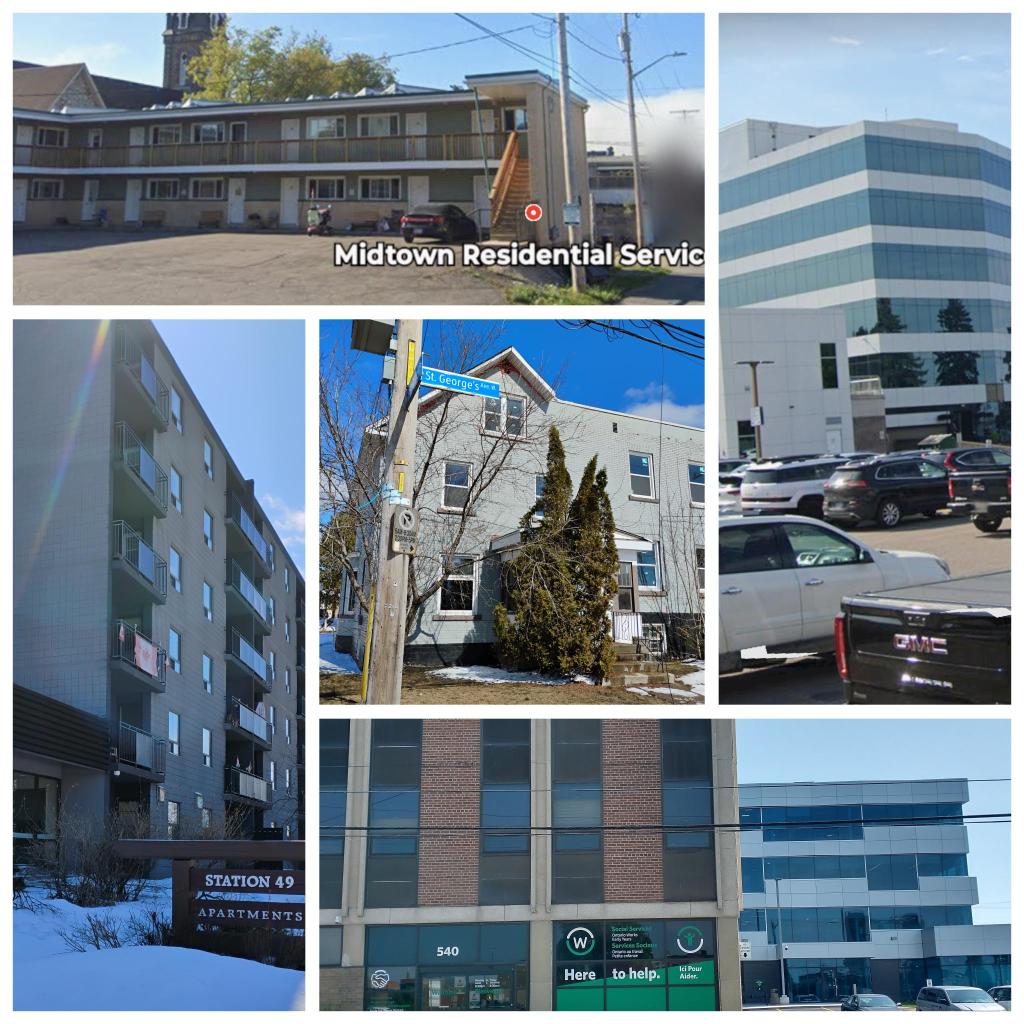
The private sector needs to be removed from affordable, social housing. The 40 Hynes Street motel, now Midtown Residential, exemplifies why the for-profit private sector needs to be removed from social housing. In 2012, a private sector entrepreneur renovated a motel with an unknown amount of government dollars to create affordable housing for Midtown Residential. In 2021, the affordable housing complex was sold to an out-of-town Corporation that neglected to maintain the property, allowing it to fall into disrepair, becoming a rat-infested slum. Again, it is not the mandate of the private sector to provide affordable housing because business profit trumps people.
Recently, SSMHC sold 212 St. George Avenue, admitting that the property is a “dead asset” to a private sector developer to create 13 affordable housing units for women and children. Can the private sector developer provide a safe, modern, properly functioning facility on a ridiculously low shoestring budget? With what this City has been through, can anyone, especially SSMHC, think downloading the responsibility of providing society’s most vulnerable women and children safe, affordable housing to the private sector is a good idea?
Mr. Peter Tonazzo, City Planner, argued and changed the City bylaw that required 30 percent affordable housing in any newly constructed apartment building in the Sault. He stated that this 15-year policy did not create affordable housing but also stymied the construction of new market-rate apartment rentals. The private sector indicated they could not financially do it and did not want to do it. Mr. Tonazzo understood that the private sector was not interested in building affordable housing; however, understanding the need for a Community Housing Improvement Plan to improve housing in our downtown core, Mr. Peter Tonazzo, City Planner, morphed it into a Community Affordability Plan. This new plan incentivizes the private sector to create affordable rental units with financial grants, waving municipal taxes, dictates rent prices, and locks the private sector into a 20-year low rental rate. This program will not guarantee long-term affordable rentals; results likely will be similar to 40 Hynes Street because the private sector will game the system.
Changing the culture of social housing would be key to creating new social, affordable housing beyond the “deserving poor” stigma. Many seniors I know would be willing to sell their homes and move into an “attainable” rental apartment. Yet, they are reluctant to give up the security of the home for a private sector rental that is not rent-controlled. The purchase of Station 49 Apartments, by SSMHC, is a good first step towards expanding social housing in the seniors rental market segment. This will allow seniors access to socially controlled and managed rental apartments at market rate with the security of a stable rent versus rental insecurity. These senior market rate, social apartment rentals can offset the cost of existing gear-to-income apartments for other tenants.
Acknowledging the failure of social housing underfunding for decades, the federal government is providing billions of dollars to social entrepreneurs (not the private sector) to construct and manage affordable housing for Canadians. Municipal housing authorities and social entrepreneurs, not the private sector, must take up the challenge of creating and expanding affordable social housing.
Mark Menean, http://www.saultblog.com
 Sault Blog
Leave a comment