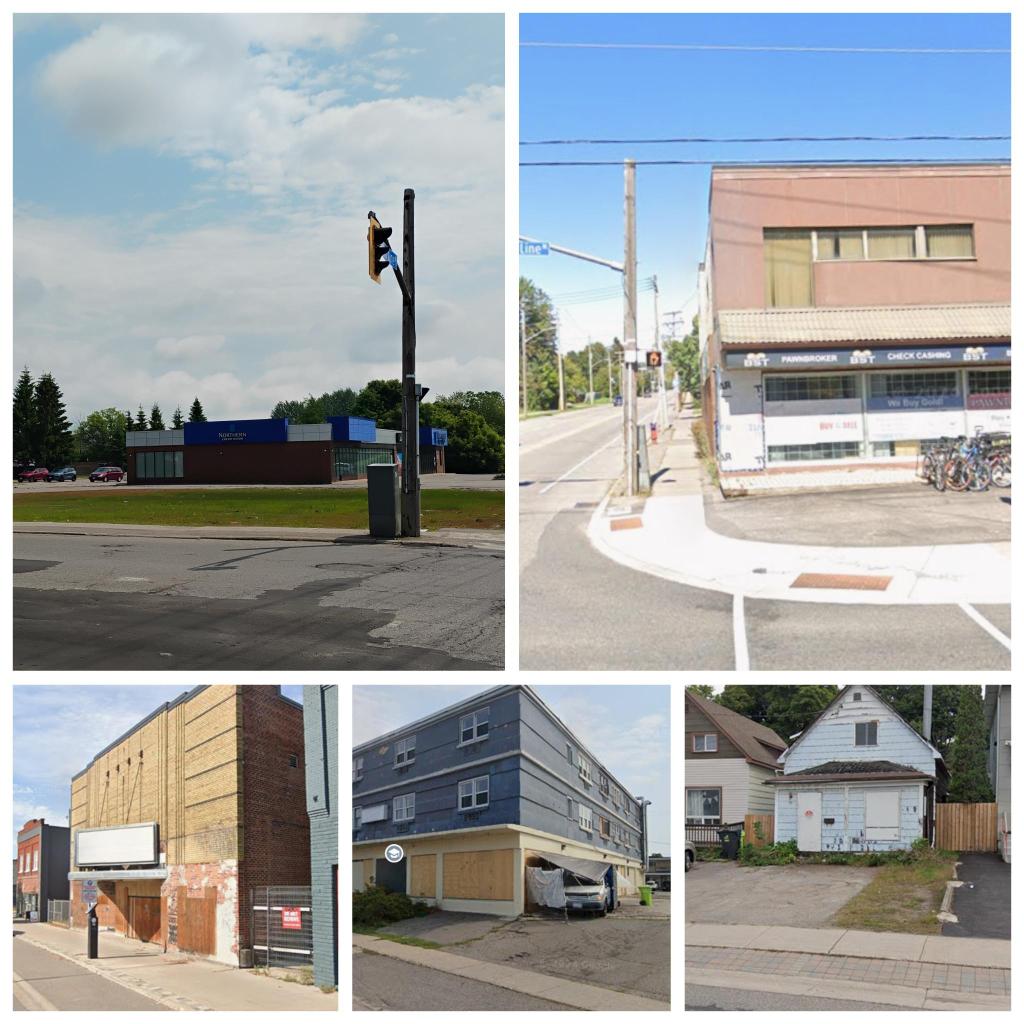
I’m just going to say it, “the intersection at Goulais Avenue and Second Line looks so much better with the problematic building torn down.” It wasn’t that bad of a building compared to the many dead asset-blighted buildings, especially in our city’s downtown core, but it needed to go.
The City purchased the building at taxpayer expense because it blocked the implementation of a right-hand turning lane from Second Line to Goulais Avenue North. Some view the cost of the property opportunism by the former owners; however, I do not believe that is the case. The problem lies with the failure to update the City’s Official Plan to include a policy of urban blight removal, land-banking, and place-making.
The Planning Department’s Official Plan was recently updated; however, it doesn’t deal with the problem of how are we going to get rid of dead asset buildings, board-up houses, and other troubled industrial, commercial, and institutional buildings in our City.
After the Great Recession and Housing Crises in the United States (2008), the United States Congress passed the Troubled Asset Relief Program (TARP), which provided funds to cities to accomplish these three (3) essential objectives: 1. Clean up brownfield sites, demolish dead asset buildings, board-up houses, and demap abandoned neighbourhoods 2. Land-banking properties: provide the funds to purchase troubled assets from the private sector. 3. Place-making: determine the best use of the new space, preferably for affordable housing. Cities like Bay, Saginaw, and Midland, MI, used the funds from the TARP program to remove dead asset buildings, houses and build affordable housing.
Fifteen years later, our Federal Government finally created the Housing Accelerator Fund (HAF), mirroring the American TARP fund. The HAF aims to provide cities with funds for “Urban Intensification,” which creates affordable housing using existing infrastructure on municipal transit systems.
The Sault received $9M from the HAF program, the financial foundation for the Planning Department’s new “Housing Community Improvement Plan” (CIP) in August 2024. The housing CIP is intended to promote the development of affordable and market-rate housing by assisting and stimulating new housing development through the use of financial incentives as authorized by the Planning Act. The Federal Government program allows the municipality to determine how the HAF dollars are spent to create new housing; however, the Cities that prioritize Urban Intensification get the most dollars.
Sault’s Planning Department did not include a blight removal strategy in the new CIP, as it did not include a blight removal strategy in the updated Official Plan. This is a mistake because removing urban buildings and housing blight is the true purpose of the HAF program: remove blighted buildings and houses, free up the existing infrastructure, and build affordable housing.
Back to the building at the corner of Goulais Avenue and Second Line, the Sault’s Taxpayers footed the total bill for the purchase and demolition of the property, almost $800,000. If our CIP had a blight removal strategy, then the CIP plan could have purchased the property, demolished the building, and used the existing property to create new, accessible, affordable housing. The City could still install the turning lane as a side benefit; but the HAF program would have paid for the property and demolision.
The number one objective of the HAF dollars for the City of Sault Ste. Marie is urban blight removal. This is the first and foremost important objective we collectively have as a City. Go block for block and clean up the blighted buildings and houses; once they are gone, affordable housing can be built.
Our City’s Planning Department needs to change its mentality: with the new HAF dollars, the City is the new infrastructure developer. Urban blight removal is the first step in urban renewal. The City’s new CIP and Official Plan need a strategy and real budget for urban blight removal so that the valuable existing infrastructure can be freed up to create affordable social housing.
Thank you.
Sault Ste. Marie, Housing Community Improvement Plan
CMHC, Housing Accelerator Fund
Mark Menean, http://www.saultblog.com
 Sault Blog
Leave a comment