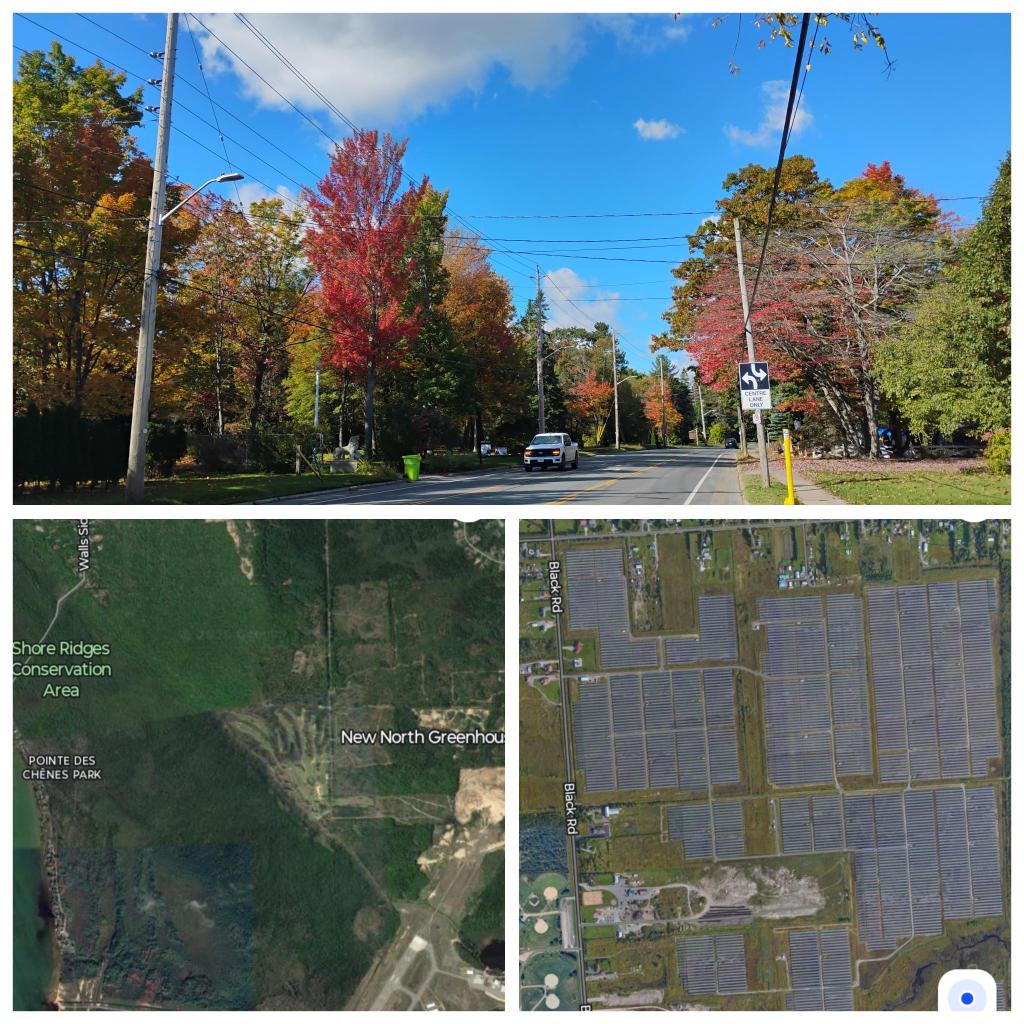
Autumn represents a fantastic time of year to enjoy our multi-coloured, tree-lined streets. I always enjoy the drive or bike down Queen Street for the variety and density of the urban tree canopy. I wish that the same density urban canopy density on Queen Street were reflected on every street in our city; unfortunately, it is not.
Many areas of our city require a greater density of trees because the tree canopy provides many benefits to our city and its citizens. The tree canopy offers significant environmental benefits, including mitigating the urban heat island effect, filtering air pollutants, and managing stormwater.
Trees also offer ecological benefits by creating habitats and promoting biodiversity. Furthermore, trees contribute to human health and well-being by improving air quality, reducing stress, and encouraging outdoor activities.
There are many economic advantages to dense urban canopies, such as reduced energy costs, eliminating the need to run air conditioning units all summer. Properly landscaped yards with a dense urban canopy increase property values. Increased property values result in a larger tax base for the municipality.
Every year that passes, many trees are removed from streets throughout our city; tree cutters and shredders abound; however, absent is the tree planting to replace the destroyed trees. Trees are easy to destroy, but difficult to replace. There is a reason for this critical omission; the City of Sault Ste. Marie does not have an urban tree protection bylaw.
The Sault is likely the last city in Ontario without an urban tree protection bylaw, even the most basic one. Most cities in Ontario have incorporated tree injury (damage) and destruction (removal) into a permitting process. To injure or destroy a tree on your property, you must apply for a city permit first.
Cities that have adopted an urban tree protection program strive to protect and increase their urban tree canopy. Firstly, home-owners need to purchase a permit ($150 approx.) to injure or destroy tree(s) on their property within the reason stipulated in the by-law (trees that are dead or sick, contaminated with an invasive species, or pose a safety risk do not require a permit for removal). Citizens who destroy trees must either replace them by planting new ones or pay into a fund to have trees planted elsewhere in the city. This ensures that the reason for destroying the tree is sound, and the urban tree canopy is at least maintained. One thing is sure: there is nobody at our Civic Centre who has championed an urban tree protection bylaw for our city’s urban canopy.
Recently, Sault Ste. Marie Public Utilities Corporation (PUC) attended a City Council Meeting and requested a support letter to apply for funding to construct solar panel farms, which would destroy 1,100 acres of old-growth urban forests. The rational argument is that electric generation using solar panels is the most environmentally friendly option; yet, it somehow justifies the ecological destruction and devastation of 1,100 acres of old-growth forest. This is not selective harvesting of logs; it’s full-scale clear-cutting of forests, resulting in environmental devastation.
There were many residents opposed to this support application, citing that the benefits of solar panel electric energy do not justify the destruction of old-growth forests. A City Councillor also questioned the need for this additional electric power, noting that within a short order, 300 megawatts of power will be brought in with the new transmission lines to power the Algoma Steel arc furnaces. Also absent from the conversation is the amount of forest canopy that the new transmission lines will destroy.
This is where a lack of an urban tree protection bylaw limits the thinking of our civic leaders and managers. Suppose it is even possible to justify the destruction of this old-growth forest; then the stipulation for ratifying the construction of this solar panel farm should have been: for every and all trees that the PUC destroys, for your solar farms, wind farms, roads, transmission lines, etc., the PUC will replace those trees by planting trees in areas that require a denser urban canopy.
An urban tree protection bylaw will ensure that everyone in our city, including the Sault Ste. Marie PUC will replace each and every tree they destroy to protect our tree canopy density, thereby contributing to efforts to bring a beautiful tree canopy to all areas of our city.
Mark Menean, http://www.saultblog.com
Thank you: City of Guelph, Private Tree By-law
 Sault Blog
Leave a comment