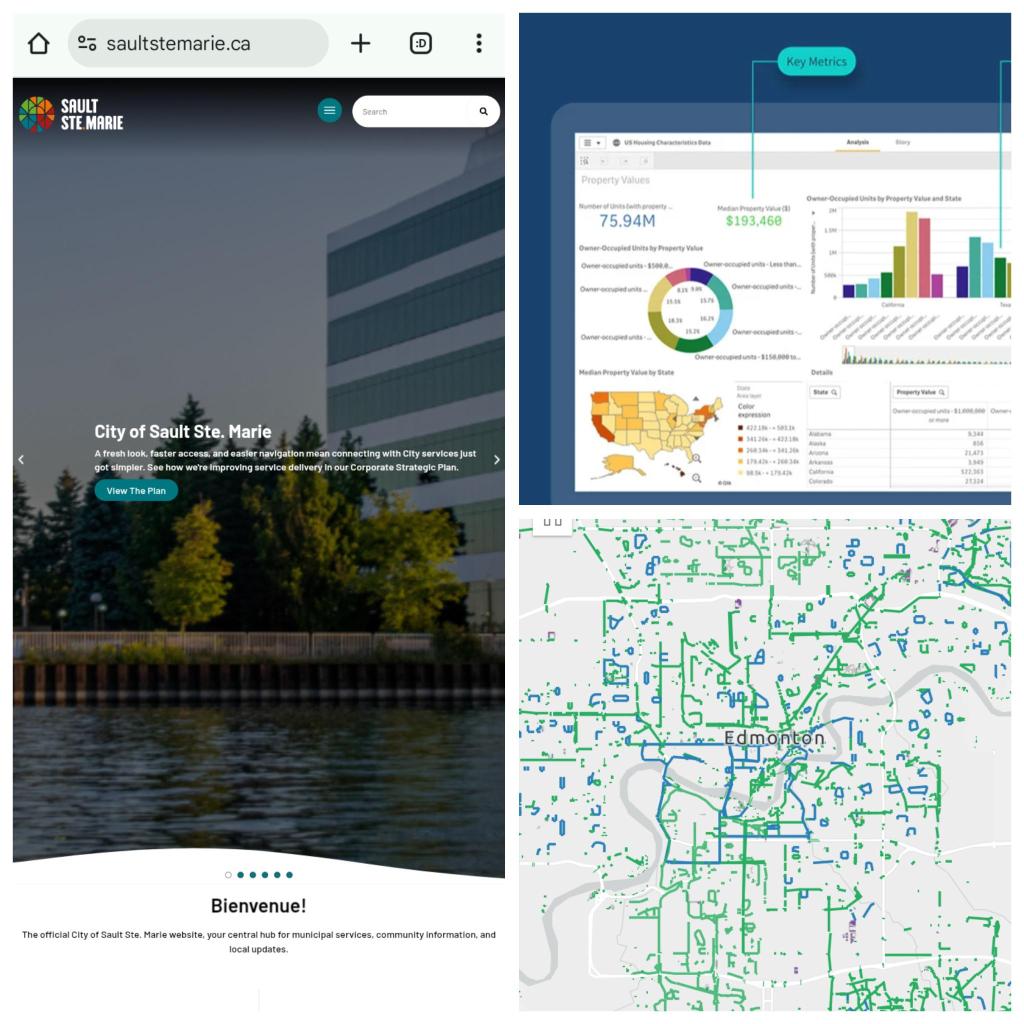
After twenty years, the City of Sault Ste. Marie has finally updated our website. It’s a “fresh look, faster access, and easier navigation mean connecting with City services just got simpler” self-describes a picturesque flow of information presented in an easy-to-understand format. The information follows the central themes of live, work, play, and government, similar to other municipalities’ websites, such as Sudbury’s. There is one big difference between our City’s new website and other municipalities; the lack of a 311 Customer Service Management (CRM) system as an underlying data engine.
What is a municipal 311 CRM system? 311 is a dedicated municipal telephone number that cities in Ontario have adopted to route all non-emergency calls for municipal services. CRM stands for Customer Relationship Management, a technology system that helps businesses manage and analyze all interactions with their current and potential customers. It centralizes customer (taxpayer) information, streamlines processes, and automates tasks across departments, including sales, customer service, customer comments, and complaints. Centralized data serves as a single source of truth for all customer contact information and interaction history, which can come from channels like cell (phone) calls, emails, websites, social media, and city proprietary apps.
A 311 CRM system requires the municipal taxpayer to set up a digital account directly with their municipality; once the account is set up, the 311 CRM system acts as a central contact point for all interactions with the city. All customer requests are collected at the 311 call, text, message, and app center and then disseminated throughout the organization to the proper department for service. The 311 system manages customer accounts and the lifecycle of service requests. It tracks the customer’s data history requests from the initial request for service through support, fulfillment, and follow-up.
Amazon Prime is undoubtedly the world’s greatest CRM system. Once an account is created, the customer can initiate a product or service order, it’s automatically charged to a credit card, and it’s tracked all the way to door delivery. There is a constant flow of information between Amazon and the customer that describes the current fulfillment status of the product or service. Amazon’s founder attributes the company’s success to two main factors: customer service through constant customer interaction and follow-up, and the collection and analysis of customer data.
At present, requests for City municipal services are handled at different City Departments. Calls for service, generally phone calls, are directed to individual departments —for example, snow removal at Public Works, property standard violations at City Building Department, loose dogs at Humane Society, etc. Department requests for service calls are generally answered or voice-mailed; however, there is never any feedback on what happened with the request. The request for service may be fulfilled; however, it is not lifecycle tracked or followed up on.
With a 311 CRM system, customer communication is key to customer service. The system provides a constant flow of communication from the municipality to the customer (taxpayer). The recent mail strikes and eventual demise of the paper mail system require a new digitally contacted municipal customer account system, which, with all the benefits of the 311 CRM technology, isn’t longer a choice to not implement the system here in Sault Ste. Marie.
The City of Sudbury emails a monthly newsletter electronically to each municipal taxpayer account, again directly connecting with the customer. More often than not, many citizens attend a Sault City Council Meeting and state: “I didn’t know about the open house,” “I wasn’t informed about this change,” “I wasn’t aware of the building permit application,” etc. The current paper mail system is breaking down; the City of Sault Ste. Marie requires a new way to standardize communications with the customer (municipal taxpayer).
A municipal 311 CRM system maintains an account history log of every customer-to-municipality interaction. This aggregated account history translates into real, valuable data. The 311 CRM system processes all this data; it’s sorted, cleaned, data based, and, most importantly, dashboarded on our new City’s website. The data collected by the 311 CRM system can graphically display the customer service request (what the taxpayer is asking for), whether the request was fulfilled, and how long it took to fulfill. The most crucial information to display on our City’s new website is customer service requests, customer comments, and customer complaints. The purpose of the 311 CRM system is to serve as a “single source of truth for all customer contact information and interaction history”.
Our new City of Sault Ste. Marie’s website needs to adopt a dynamic approach to communicating services. Take, for example, last year’s horrendous snowfall accumulation. The question on every citizen’s mind was: When is the plow truck going to plow my street, cut back, and remove snowbanks? The City of Edmonton installed trackers in its snowplows and snow removal equipment and displayed the progress of its snowplows and public works department’s removal efforts on its website. This is how a City communicates municipal customer service delivery. This type of technology needs to be adopted by our City Administration, so that the valuable work done by City Staff can be communicated in an up-to-date, dynamic manner, on it’s website.
Our City’s new website looks good; however, the Corporation of the City of Sault Ste. Marie still lacks an equivalent 311 CRM system to manage customer requests for service and present and communicate (dashboard) the data results on it’s website.
Mark Menean, http://www.saultblog.com
Thank you. City of Sault Ste. Marie, Sudbury, and Edmonton websites.
 Sault Blog
Leave a comment