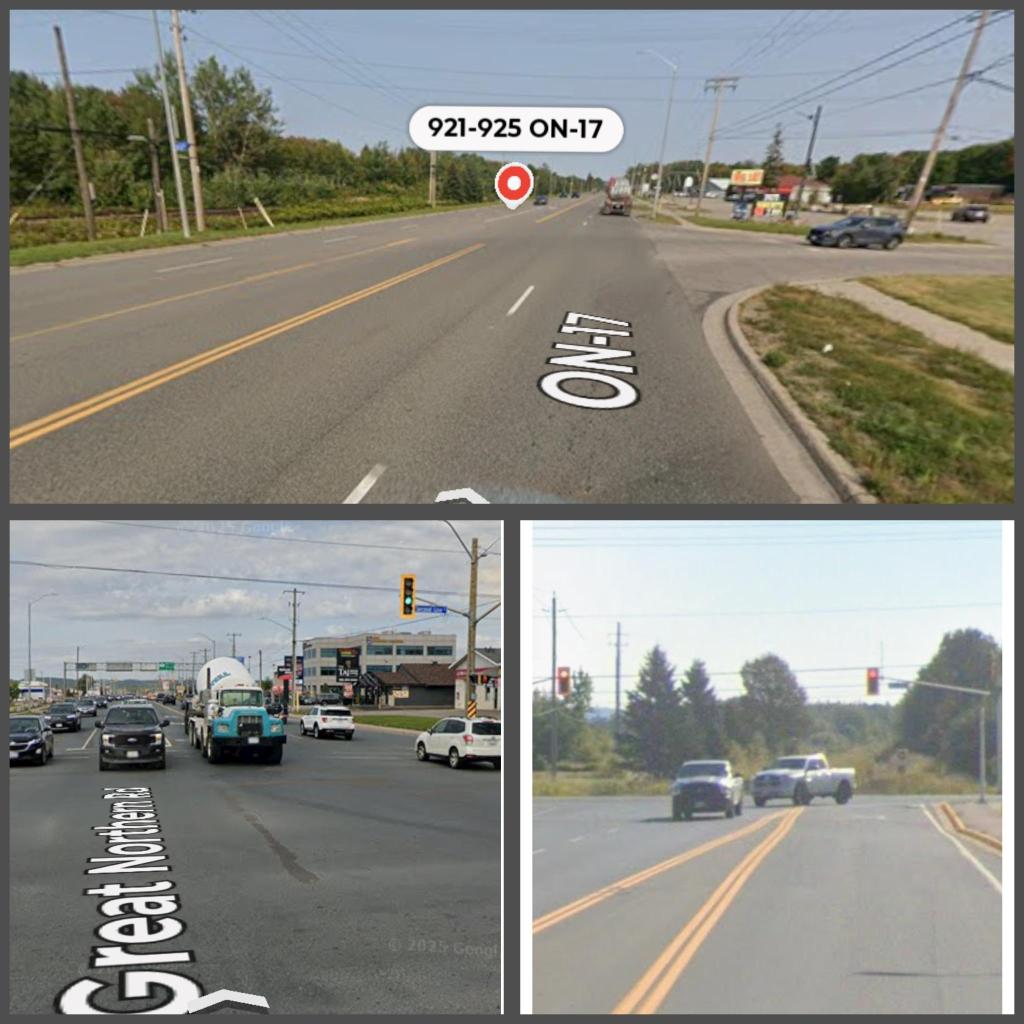
A number of Northern Ontario Mayors are advocating for major Northern Ontario highway construction projects as necessary, significant National Infrastructure Projects. I couldn’t agree with them more.
As a Northerner, I have travelled these highways repeatedly over the decades to Thunder Bay, Ottawa, and Toronto. Although I find the highways showcase the beauty of Northern Ontario in the summer months, I will not travel them in the winter, as I believe they are death traps.
The dreadful winter driving conditions represent a real driving safety challenge; however, the real problem with our northern highways is functionality. The highways in Northern, ON, are expected to serve as highways, roads, and streets at the same time. Probably the best way to explain our highway’s flaws is to examine a properly built highway and road infrastructure system that correctly delineates the functions of a highway, a road, and a street: the I-75 Interstate in Sault, Michigan.
In the 1950’s, a National System of Interstate and Defence-Highways network of controlled-access freeways was authorized and built in the United States of America. It connects major U.S. Cities, featuring at least 2 lanes in each direction, medians, overpasses, and no stoplights. The Interstate Highway has only one function: fast, safe travel of automobiles and commercial traffic; it is NOT to be used as a road or a street.
I-75 Interstate Highway starts at the International Bridge and heads south; it bypasses Sault, MI. However, there are a number of cloverleaf overpass interchanges that allow access to the city. The Three (3) Mile interchange provides access to the I-75 Business Spur, which directs traffic to industrial, commercial, retail, downtown, and suburban streets in Sault, MI.
I-75 Business Spur’s function is similar to our Second Line, Trunk, Black, and Great Northern Roads; however, it operates properly because it serves only as a road, not a highway. In Sault, ON’s case, we expect our roads to function as both highways, roads, and streets, causing all sorts of traffic and safety problems.
At a recent City Council meeting, staff were asked to examine the feasibility of extending Dacey Road over the railroad tracks to Frontenac Street and to install a traffic light at the Dacey and Trunk Road intersection for pedestrian safety. This may be a good idea; however, it’s not the fundamental underlying problem. Removing the highway from Trunk Road is the number one priority.
Why not advocate for completing the new four-lane Highway 17 through the Batchewana First Nations Reserve and connecting it to the Second Line and Black Road intersection, which could be upgraded to an interchange? This would dramatically solve the traffic problems on Trunk Road and lower Black Road.
A new highway bypass could then be created to remove highway traffic from the Second Line and Great Northern Road intersection, which clearly hasn’t functioned properly for a number of decades now. It would be difficult, but not impossible. Again, having a highway bypass around Second Line and Great Northern Road will make that intersection and the surrounding business area safer and function as a road and not a highway.
Highway bypasses do not hinder business; Sudbury, for example, has been fortunate to obtain funding to construct proper highway bypasses around the city. Sudbury has never been busier and is experiencing fantastic economic growth.
Again, as a Northerner who has travelled to Toronto since the 1980’s, I have seen the progression of the four-laning of Highway 69 from Barrie to Sudbury. This has been a forty-five-year slog to get it done; however, it’s almost finished. What a difference driving from Sudbury to Toronto on a safe, purpose-built, proper highway system. The former Highway 69 from Sudbury to Toronto was a death trap, winter or summer, a scary, anguished drive; but not anymore.
There are a number of highway stretches that have been four-laned from Sudbury to the Sault; however, it’s our turn to get Highway 17 four-laned all the way to Sudbury, with a proper city bypass to direct highway traffic north. This National Infrastructure Building Program will not only be a benefit to Saultites, but also for the benefit of all Canadians.
Mark Menean, http://www.saultblog.com
 Sault Blog
Leave a comment