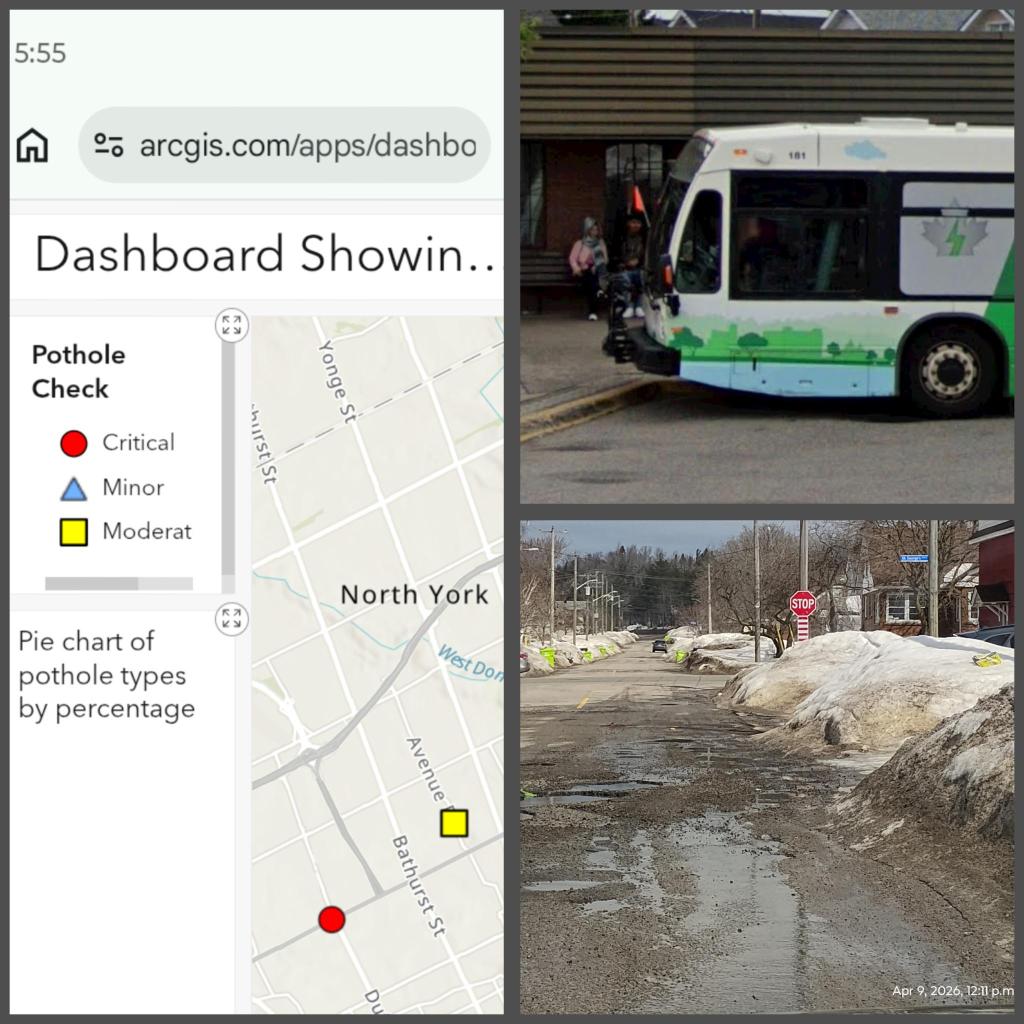
Recently, I rode the city bus Downtown and was shaken by the numerous potholes on Queen Street. By the time the City Bus reached the main terminal, I was amazed the wheels hadn’t fallen off.
I asked the Bus Driver, “If all city streets were this bad,” and his answer was, “No, they are worse.”
The city bus I rode was fairly new, clean, and well-maintained, and the driver was excellent; however, that bus took a pounding along the length of Queen Street, which, incidentally, has been recently extensively resurfaced.
I believe that our City has budgeted approximately $4 million annually for bus replacements. The last figures budgeting a standard diesel 40-foot bus at $650,000-$800,000 and an electric bus at around $1,100,000. It is my understanding that the City Administration is leaning toward electrifying our transit mobility fleet with federal and provincial funding assistance. With these new buses costing more than a million dollars each, we ought to take better care of them, and not subject them to the massive blight of potholes on our City’s roads and streets.
As drivers, our vehicles are also subjected to the same blight of road and street potholes. Our City website recommends reducing the risk of pothole damage to your vehicle by: reducing speed; maintaining optimal tire pressure; keeping the steering wheel straight and avoiding sudden braking when encountering a pothole; and steering around the pothole safely.
Even if you heed the City’s pothole-damage prevention advice, incidents happen, and potholes can cause major damage to your car’s exhaust system, suspension system, tires, and wheel alignment. It will be interesting to see what happens to electric vehicles’ battery systems in pothole-related damage reports. The question becomes: who is responsible for paying for the damage these potholes cause?
Rates.ca, an online insurance resource, states that, in most cases, pothole damage to your vehicle is covered under collision or all-perils insurance. However, you will be responsible for paying the deductible on your policy.
Our municipality can also compensate you for pothole damage repair if your vehicle and the pothole meet specific eligibility criteria for a claim against the City.
Our City’s website states:If you believe that the City has been negligent in its maintenance of municipal facilities, roads, or sewers, which has caused you injury or damage to your property, you can file a claim.
In order to obtain compensation from the City of Sault Ste. Marie, one must prove that the damage was caused by neglect. What constitutes the fact “the City has been negligent in its maintenance of municipal roads” becomes the central issue.
The City states that “pothole patching is based on information collected during road surveys and inspections as well as service requests received by the community. To report a pothole, please provide: the street name; nearest address; and which lane the pothole is in.”
The City is actively collecting pothole service request data; however, how does this information get communicated to the citizens of the Sault? It doesn’t.
In my opinion, there are three types of pothole damage neglect in our City:
Firstly, the pothole is there; it has been reported internally or through a customer service request, but it has not been filled in a timely manner for whatever reason.
Secondly, there has been an accumulation of pothole patches over the years. This would be long stretches of potholes on a street or road that have gone through years of constant freeze-thaw cycles, causing damage to vehicles.
Thirdly, the failure to communicate the locations of extensive potholes on a City’s Geographic Information System (GIS) website map.
Unfortunately, our City lacks a 311 Customer Relations Management system that logs, tracks, and maps pothole service requests; other cities can display that critical information on their municipal websites through GIS data.
In the Sault, there is a new Facebook Page created by two local Sault College Students called “Pothole Surveillance Unit: A grassroots project that seeks to document the potholes of Sault Ste Marie, ON, and upload them to a live map. Their Facebook Page states that progress is “currently in the beginning stages of getting everything online, will add links/websites as we go along!”
If this passionate small student startup is successful in accumulating the City pothole data and mapping it, they will be able to track the potholes, determine how long it took to fill the pothole, get an aggregate length of time filling potholes, map and display the severity of pothole damage on streets and roads, on a yearly basis.
Having this data allows the vehicle-driving customer a much better understanding of the condition of our roads, how long the pothole(s) and pothole blight have been there, and can help determine whether the damage to a vehicle could have been prevented, and whether the pothole damage constitutes negligence.
This data mapping can identify the worst pothole areas of the City to avoid. These data-driven maps can identify exactly how much money will be required to resurface the many extensively damaged pothole streets and roads in our City, and prevent City Council and City Administration from kicking the pothole blight down the road, as is done year in, year out.
Mark Menean, http://www.saultblog.com


Leave a Reply