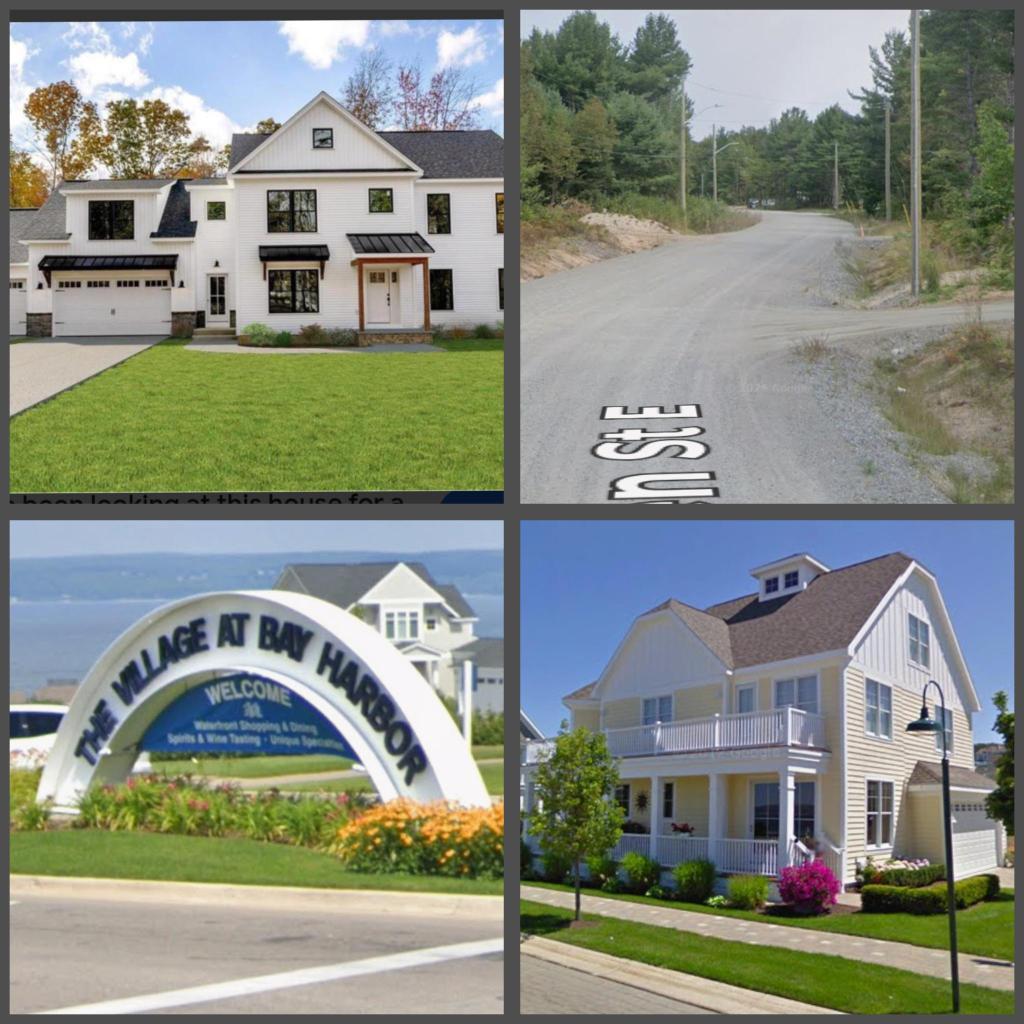
The Sault’s Planning Department recently sought and obtained City Council’s approval of an Official Plan bylaw change to expand our City’s Urban Service Area (U-SA) and to allow the creation of large-lot Rural Estate Subdivisions for new McMansion home development, similar to the 1980s.
No doubt that the City Council was lured into the “we need more tax base” strategy that has failed for this City time and time again. These McMansion subdivisions are a bad idea for our City at every single matrix. Let’s examine how other municipalities are addressing the new realities of Rural Estate Subdivisions.
Michigan municipalities, such as Petoskey, Charlevoix, Traverse City, and Midland, allow new Rural Estate Subdivisions on the condition that they become a Home Owners Association (HOA). These municipalities transfer all municipal service responsibilities to the HOA; however, property owners still pay full municipal taxes. These municipalities understand that these Rural Estate Subdivisions do NOT generate sufficient municipal tax revenues to offset their short- and long-term maintenance costs, and are unwilling to expand their U-SA with additional staff, equipment, and other costs.
In the United States HOAs have proliferated rapidly, approximately 84% of new single family homes sold in 2022 up from 49% from 2009 are in HOAs. This surge is largely driven by local governments requiring them for new developments to minimize public costs for infrastructure maintenance as indicated in a study done by the National Association of REALTORS.
These million-dollar homes are also powerful investment tools, and property owners want property appreciation through property maintenance and bylaw enforcement standards lacking in municipalities. Rural Estate Subdivisions, also called gated communities, offer built-in exclusivity and private security because the property owners do NOT believe that municipal neighbourhood policing is sufficient to protect their families and property. HOA property owners are prepared to pay HOA fees for all their municipal services, including road and sidewalk maintenance, garbage pickup, landscaping, infrastructure repairs, private security guards, and other fees deemed necessary by the HOA administration, because they believe the extra cost is worth protecting their investment and family.
The Sault’s Planning Department fails to understand that this extremely low-density housing model will be net-negative to our City’s tax levy. It will cost the City more to maintain these subdivisions than the municipal revenues they generate, especially given their extremely high lot vacancy rates. Case in point is the Rural Estate Subdivision at the end of Queen Street East; empty lots everywhere in the subdivision for decades, yet our City Works Department must maintain the subdivision fully.
Any new subdivision in this City, especially these Rural Estate Subdivisions, must be an HOA; this must be an Official Plan policy change immediately.
These far-flung rural estate subdivisions are completely car-centric; it’s not uncommon for these McMansions to have triple-car attached garages with double-car garages in the backyards, as everyone will need to drive to go anywhere or do anything.
Recently, a taxpayer-funded Toronto Transit Consultant report flatly told City Council, with the City Planning Department present, that to try to hold the line on City Transit costs, the City Bus Routes must be truncated; therefore, City Buses will no longer go to the far reaches of our City, rendering these Rural Estate Subdivisions completely car-centric.
There is almost a taxpayer revolt over the deplorable condition of our extensive existing City’s roads and streets, with long-overdue resurfacing at an astronomical cost; therefore, I question expanding our City’s infrastructure when we clearly cannot or will not maintain the roads and streets we already have.
At the taxpayer’s expense, our City hired a Greenhouse Gas (GHG) emissions reduction coordinator with a mandate to get the City’s Operations to reduce GHG emissions. Enlarging the Sault’s U-SA and allowing the creation of far-flung Rural Estate Subdivisions will require additional maintenance staffing and equipment, increasing GHG emissions rather than lowering them.
Although the City Planning Department espouses the need for these Rural Estate Subdivisions and the pent-up demand for McMansion housing, I really have a hard time believing it. These large-acre lots, 2,000-plus-square-foot homes, 2-3-car attached garages, additional garages, independent water wells, septic systems, massive landscaping, fencing, and driveway costs are prohibitively expensive, ranging from $1.5 to $2 million. These massive completed McMansions cannot hide under the 2016 MPAC assessments for long and will be fully assessed at current assessment values, representing a municipal tax unaffordable to most City residents. Our City’s high property tax mill rate has probably already killed the market for any new Rural Estate Subdivisions with McMansion homes.
It’s not 1980 in the Sault any longer; our City Planning Department’s reintroduction of a failed Rural Estate Subdivision policy flies in the face of everything that is wrong with these subdivisions. The Rural Estate Subdivision costs more to maintain than municipal taxes collected; it adds to an already out-of-control City GHG carbon emissions; it’s completely car-centric; it’s elitist; it enlarges the City’s U-SA, where we have already failed to maintain City street and road infrastructure; and it fails to introduce an HOA policy that Rural Estate Subdivision property owners demand.
Mark Menean, http://www.saultblog.com


Leave a Reply